

Few rituals say more about this city than the hammam. Long before Istanbul had spas, wellness centres or rooftop pools, it had steam, marble and water — and a social life built around all three. A visit to a Turkish bath was never only about getting clean. It was about slowing down, letting the heat do its work, and giving the day a different rhythm.
At Blu Ma'Cel, that tradition is not something you have to go looking for in a crowded historic bathhouse. In our Suite with Private Hammam, the marble steam room is part of the room itself: yours alone, available whenever you want it, with no appointment, no queue and no shared bench. This guide explains what a hammam actually is, how the ritual works, and how to make the most of a private one during your stay in Sultanahmet.
What a Turkish Hammam Actually Is
The hammam is the Ottoman continuation of a much older bathing culture. Roman and Byzantine baths shaped the architecture; Ottoman builders refined it and gave it a social role that lasted for centuries. Neighbourhood baths were built next to mosques, markets and han courtyards, and they served as meeting points as much as washing places. Brides were prepared for weddings in them. Business was discussed in them. News travelled through them.
Architecturally, a classical hammam is organised around three temperature zones. The camekan is the cool entrance hall where you undress, rest and drink tea afterwards. The soğukluk is the warm transition space. The hararet is the hot room, usually domed, with a heated marble platform at its centre called the göbek taşı — the navel stone — where bathers lie down and let the heat open the skin before washing.
What makes the experience distinctive is that the heat is humid rather than dry. Unlike a Finnish sauna, a hammam works with steam at a lower, gentler temperature, so the body warms gradually. That is precisely why it suits an evening after eight hours of walking on cobblestones: it relaxes without exhausting.
The Ritual, Step by Step
The traditional sequence is simple, and it is worth following even in a private hammam, because the order is what makes it effective.
- Warm up. Sit in the steam for ten to fifteen minutes without doing anything. This is the part most people rush. Do not rush it — the rest of the ritual depends on the skin being properly warmed.
- Rinse. Pour warm water over yourself several times using a bowl, or use the rain shower. In a classical hammam this is done with a copper tas, and the rhythm of pouring is part of the pleasure.
- Exfoliate. Using a coarse mitt known as a kese, work over the arms, legs and back in long strokes. After proper warming, the effect is immediate and slightly startling the first time.
- Foam and wash. Traditionally a cloth bag is used to produce a cloud of olive-oil soap foam. At home, or in a suite, a good soap and a soft cloth do the same job.
- Cool down slowly. Finish with cooler water, wrap yourself in a peştemal — the flat woven cotton towel you will see all over Istanbul — and rest for at least twenty minutes. Drink water or tea. Do not go straight out into the street.
Why a Private Hammam Changes the Experience
Historic public baths in Istanbul are beautiful, and worth seeing at least once for the architecture alone. But they come with realities that not every traveller enjoys: fixed opening hours, shared marble, attendants working to a schedule, and — in the most famous ones — a queue and a price list built for tour groups.
A private hammam removes all of that. There is no booking window, so the bath fits your day instead of the other way around. There is no shared space, which matters a great deal to couples, to families and to anyone who simply prefers privacy. And because it is inside your own suite, the transition afterwards is three steps to bed rather than a walk home through a cold street — which, for a bath whose main benefit is relaxation, is not a small detail.
It also changes how often you use it. Guests who book a private hammam rarely use it once. They use it after the long first day of sightseeing, again before dinner on the second evening, and often on the last morning before checking out. That repetition is only possible when the bath is a few metres from your bed.
Inside the Suite with Private Hammam at Blu Ma'Cel
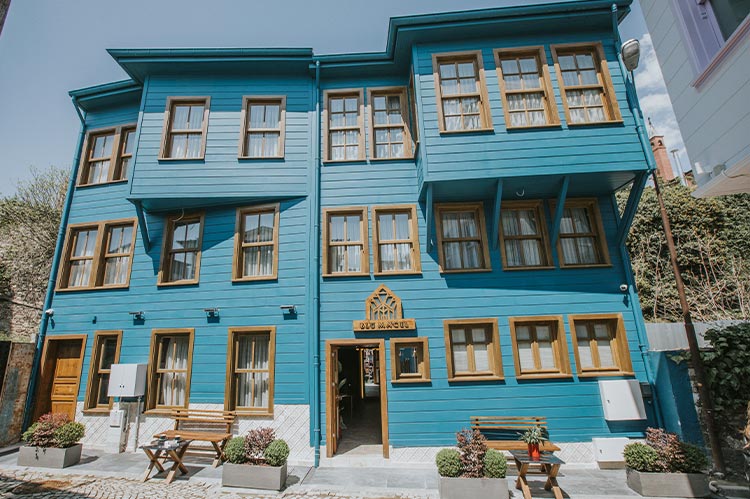
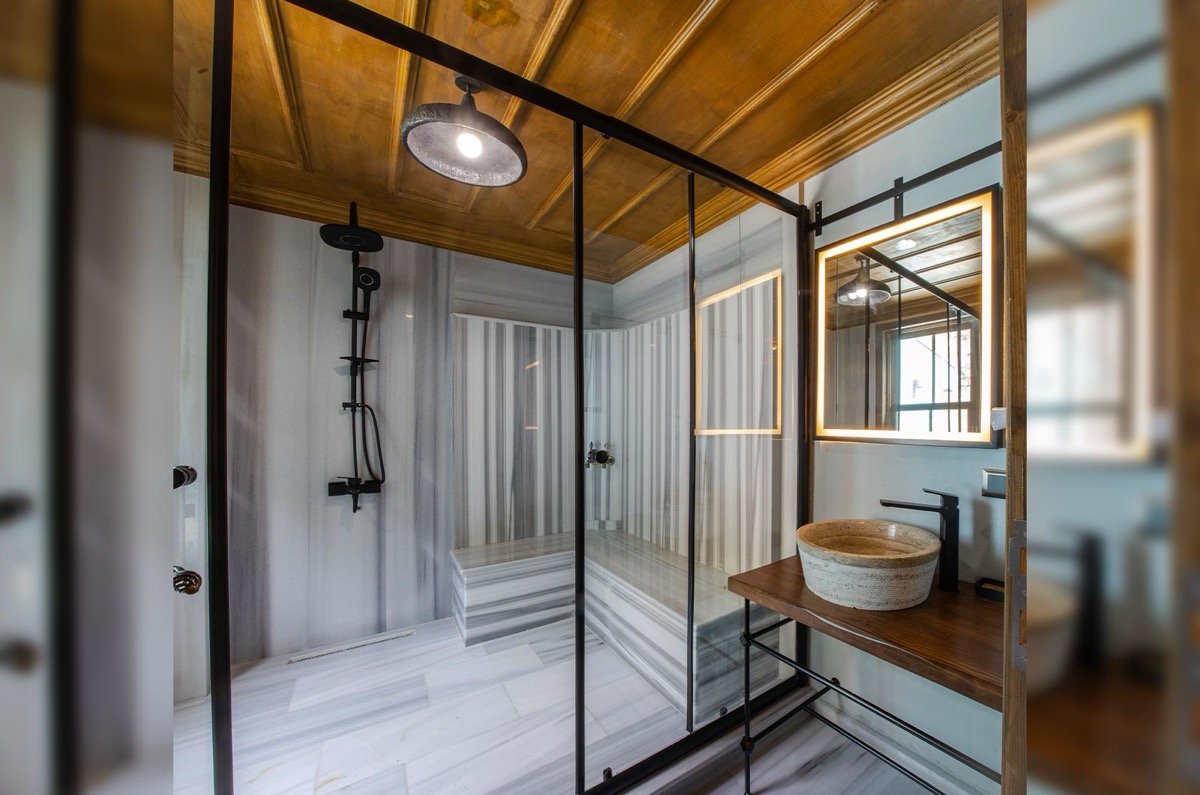
Our hotel occupies a restored wooden Ottoman house in the quiet streets of Sultanahmet, and the hammam suite was designed to belong to that building rather than to look like a hotel spa insert. The bath is finished in striped grey-and-white Marmara marble, with a built-in marble bench, a rain shower and a glass enclosure that keeps the steam where it belongs. The wooden ceiling of the original house continues above it, which is what makes the room feel like part of a home rather than a facility.
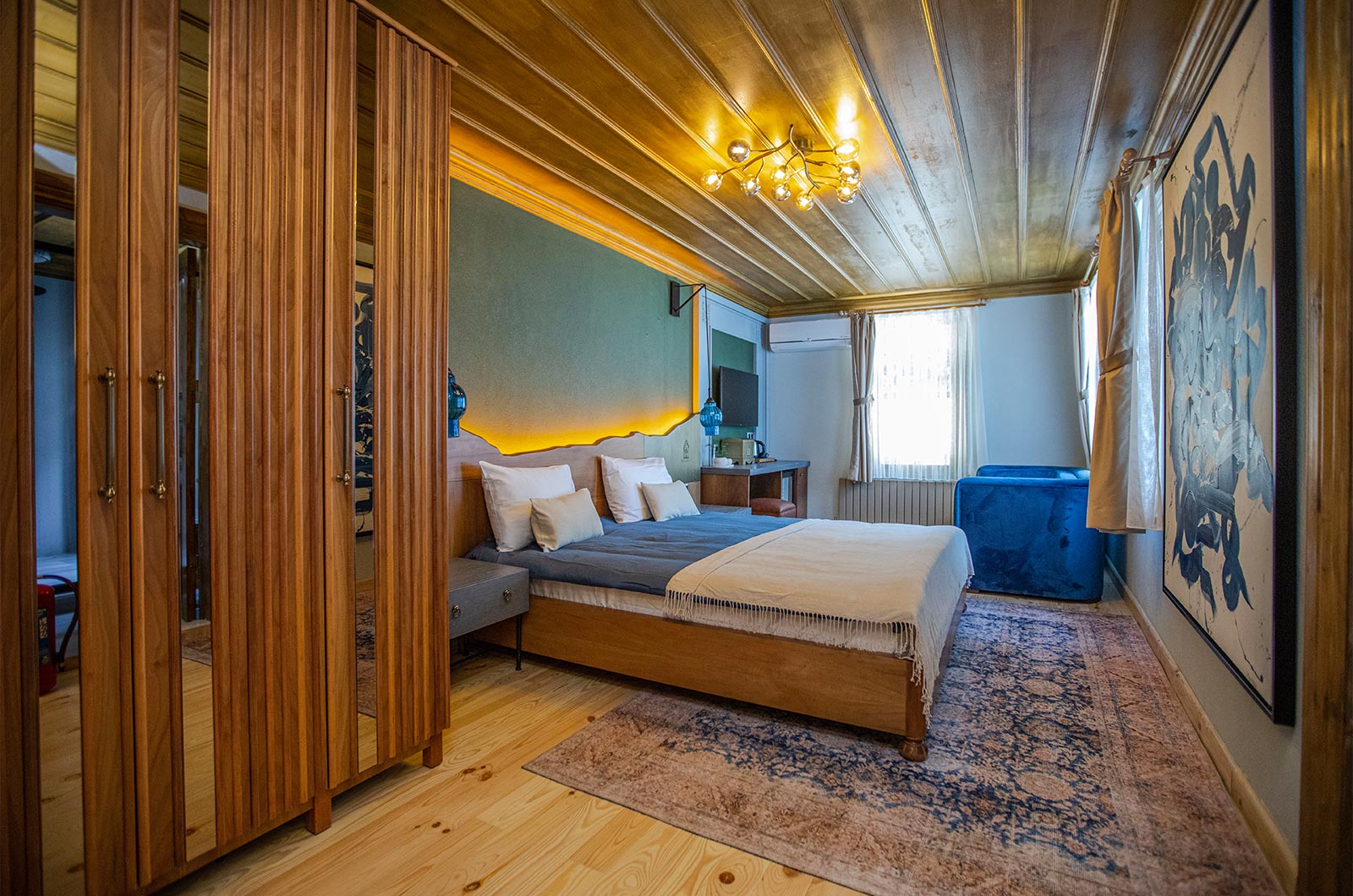
The suite itself follows the same logic: hand-finished timber, deep green and blue tones, an original wooden ceiling, a large bed and a seating area by the window. If you would like to read more about how we think about materials and space, our guide on what comfort actually means in a boutique hotel covers the reasoning in detail.
How to Use Your Private Hammam: A Practical Guide
A few practical notes make a real difference:
- Allow an hour. Twenty minutes of steam, twenty of washing, twenty of resting. Anything shorter and you get a hot shower rather than a hammam.
- Hydrate before and after. Steam dehydrates. A glass of water before you start and another afterwards is the difference between feeling light and feeling tired.
- Do not go in immediately after a heavy meal. Wait at least an hour and a half. This is standard advice in every historic bath in the city, and it holds at home too.
- Evening beats morning. The hammam lowers your heart rate and relaxes the muscles; used at night it improves sleep noticeably, which is exactly what you want after a day covering the Old City on foot.
- Take it easy the first time. If you have never used a steam room, start with shorter sessions and step out whenever you want. There is no schedule to keep.
What to Bring and What Is Provided
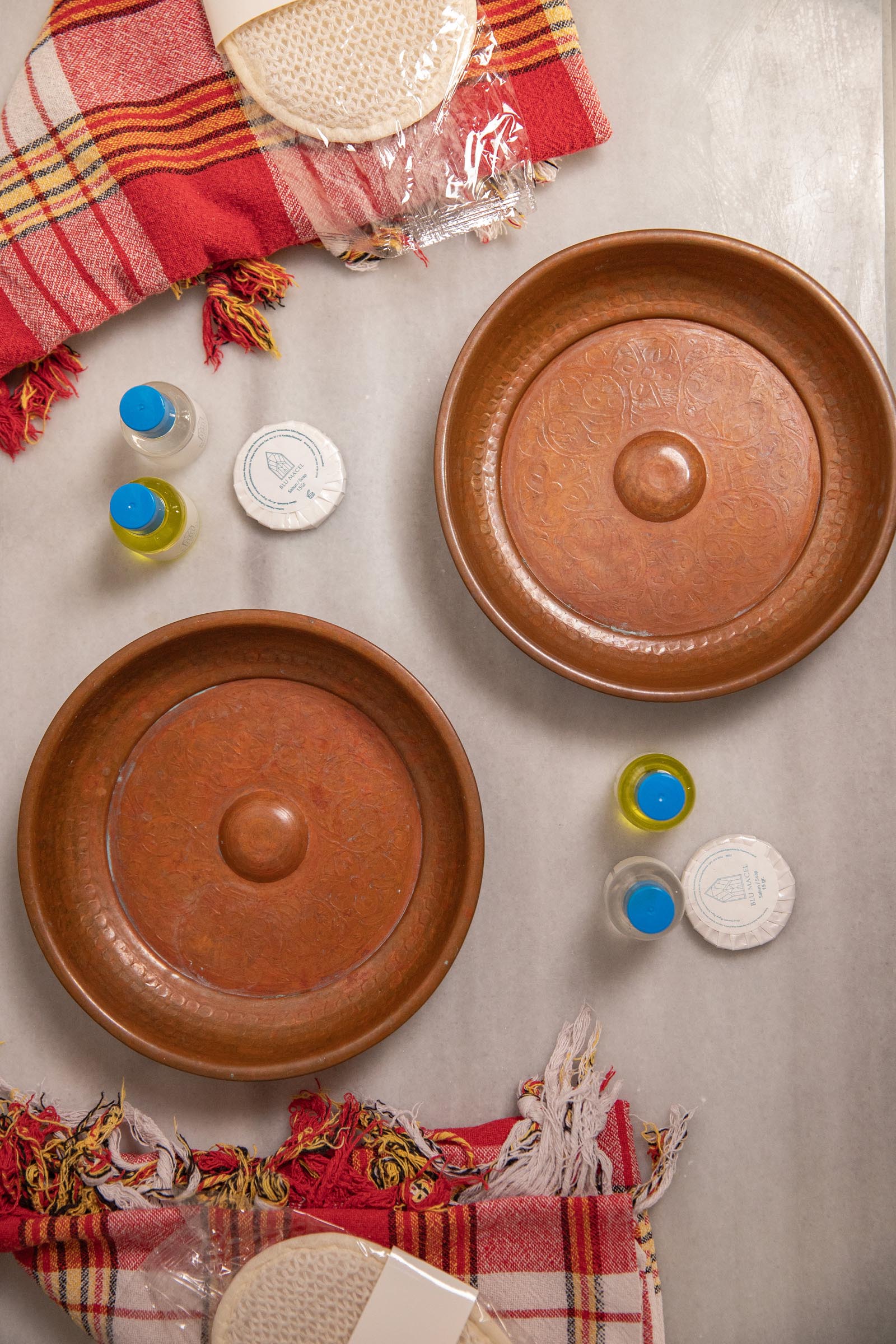
You do not need special equipment. Towels, a bathrobe and toiletries are provided in the suite. If you would like the full traditional experience, two inexpensive items are worth buying in the neighbourhood: a kese exfoliating mitt and a bar of olive-oil soap. Both are sold in the small shops around the Arasta Bazaar and the Grand Bazaar, and both make excellent souvenirs. Our post on the quieter corners of Sultanahmet points to several of the streets where these shops are still run by the same families.
A peştemal — the thin, quick-drying woven towel used in Turkish baths for centuries — is the third thing worth taking home. It weighs nothing in a suitcase and works as a beach towel, a throw or a light blanket long after the trip is over.
Fitting the Hammam Into Your Istanbul Days
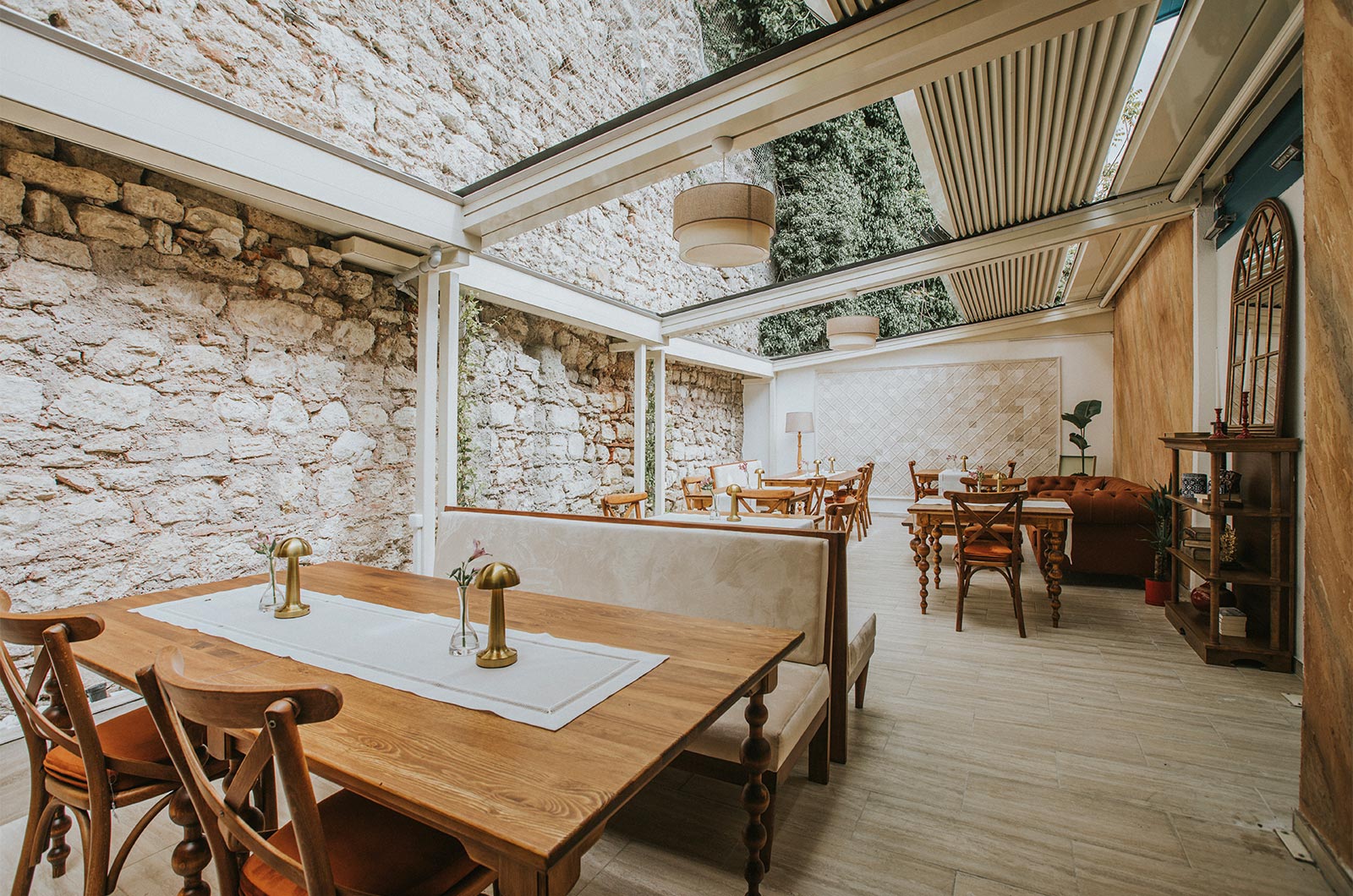
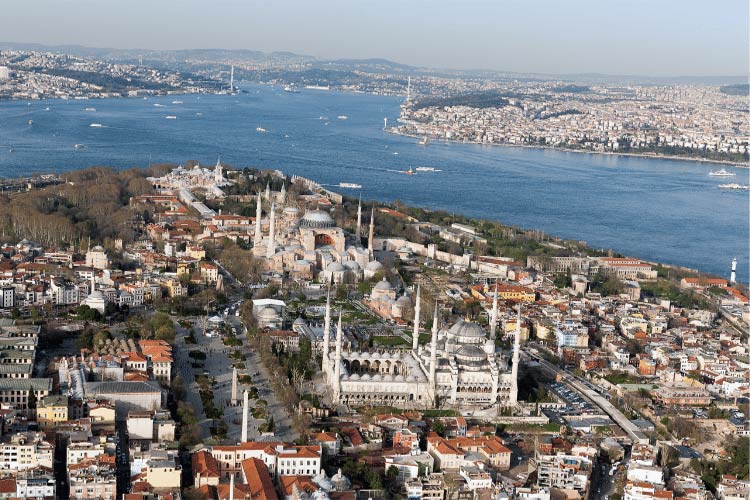
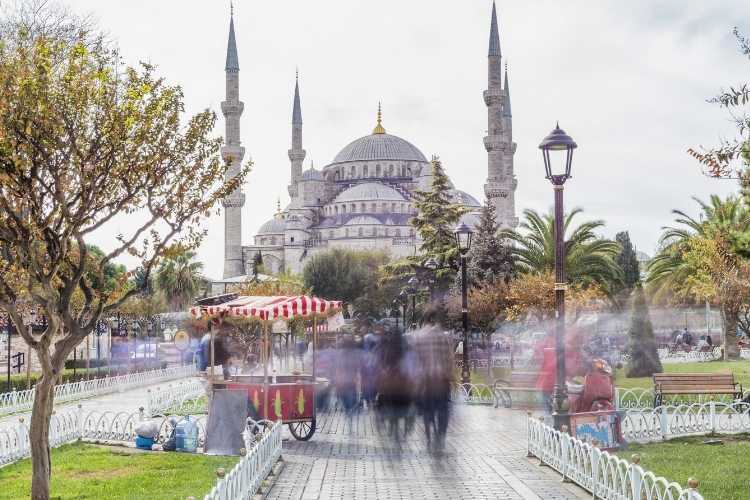
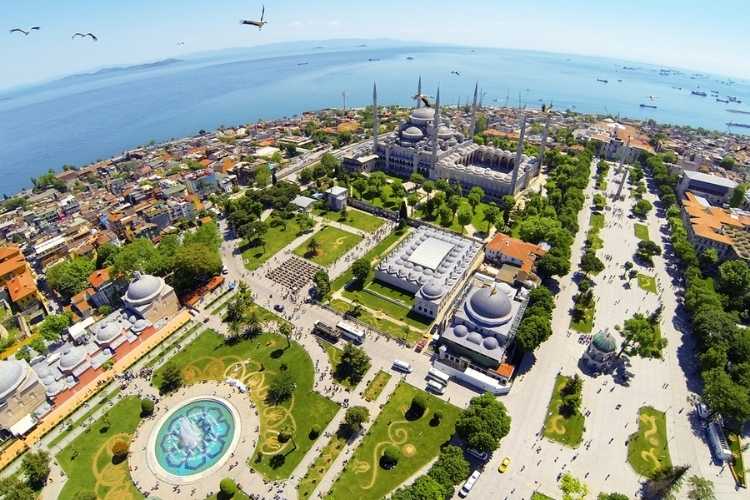
Sultanahmet is a walking district, and that is its great advantage — Hagia Sophia, the Blue Mosque, the Basilica Cistern and Topkapı Palace are all within a few minutes of the hotel. It is also, physically, a demanding one. Cobbled slopes, long museum floors and steady queues add up, and most visitors underestimate how much ground they cover in a day.
This is exactly where the hammam earns its place in the itinerary. A sensible pattern looks like this: sightseeing until late afternoon, an hour in the hammam, then dinner. If you are planning your days in detail, our three-day itinerary for Istanbul's Old City shows how the main sights fit together, and where the natural breaks fall.
Mornings deserve their own mention. A slow Turkish breakfast on a Sultanahmet morning is one of the pleasures of staying here, and it pairs unusually well with a short steam beforehand. Our guide to the Turkish breakfast table explains what to expect from it — and why it takes longer than you think.
Frequently Asked Questions
Is a private hammam the same as a public Turkish bath?
The heat, the marble and the ritual are the same. What differs is scale and company: a historic public bath is a large domed hall shared with other visitors and staffed by attendants, while a private hammam is a small marble steam room used only by the guests of that suite.
How hot does it get?
A hammam is deliberately gentler than a sauna — warm, humid air rather than intense dry heat. Most people find it comfortable for fifteen to twenty minutes at a time.
Is it suitable for everyone?
Steam is not recommended during pregnancy, or for anyone with cardiovascular conditions, low blood pressure or acute illness, without medical advice. If in doubt, ask your doctor before your trip.
Can families use it?
Yes. Privacy is precisely the reason many families choose this suite, and children can use the room briefly with an adult, at a lower temperature and for shorter periods.
How far in advance should the suite be booked?
The hotel has a limited number of rooms, and the hammam suite is the one that goes first — particularly in spring and autumn. Two to three weeks ahead is sensible; longer around public holidays.
A Final Word
The hammam has survived in Istanbul for five hundred years because it does something no piece of modern equipment quite replicates: it forces you to stop. There is nothing to do in a steam room. No screen works there. You sit on warm marble, listen to water, and after twenty minutes the day looks different.
Having that in your own suite, rather than at the end of a tram line, is a quiet luxury — and one that fits the way we think about hospitality here. If you would like more on how to structure a genuinely restful stay with us, our guide to a relaxing stay at Blu Ma'Cel is the natural next read.